
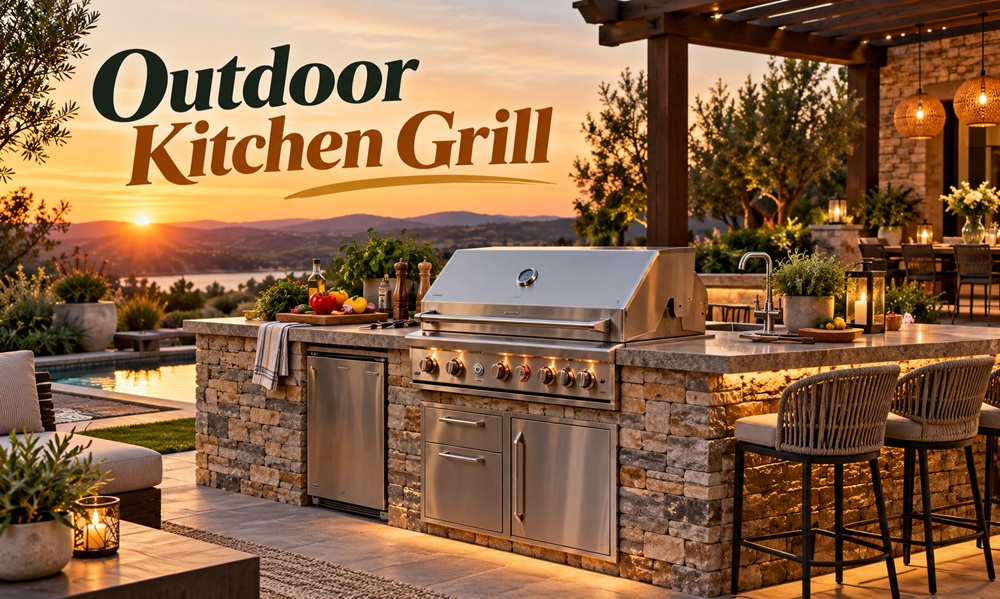
The grill is the centerpiece of an outdoor kitchen, and it’s also the piece most people replace first if they pick wrong. A good outdoor kitchen grill matches your fuel preference, fits your cooking habits, and is built to sit inside a counter structure without becoming a safety problem. Start with a few honest questions. How often do you cook outside? How many people do you feed? Do you want quick weeknight convenience or slow, smoky weekend projects?
Built-in or freestanding
Outdoor kitchens normally use built-in grills, also called drop-in models. They’re designed to sit in a cutout in the counter and look like part of the structure. A freestanding cart grill rolls on wheels and is meant to stand alone.
Do not slide a freestanding grill into a built-in cutout. Those units usually aren’t designed for enclosed spaces, and putting them inside combustible or tight enclosures can create a fire hazard. Always follow the manufacturer’s instructions about what the grill is rated for, and use a model made for built-in installation.
Some freestanding grills can be placed beside an outdoor kitchen counter and still work well, particularly if you want the flexibility to move them. A cart also makes it easy to replace the grill later without altering the masonry.
Fuel types
Gas grills
Gas offers the fastest start and the most predictable heat. Propane and natural gas are the two options. Propane uses a portable tank, so it’s simple to set up anywhere. Natural gas needs a line run to the grill, usually by a licensed professional, but you’ll never run out of fuel mid-cookout. Grills are typically built for one or the other, though some can be converted with a kit from the manufacturer, so check before you buy.
Charcoal grills
Charcoal gives the classic flavor and can reach high searing temperatures. It takes longer to light, requires ash cleanup, and needs more attention to temperature control. Many charcoal units aren’t designed for enclosed counter installation because of the heat they produce, so check carefully if you want one in your kitchen.
Pellet grills
Pellet grills burn compressed wood pellets and use electronic controls to hold a set temperature. They’re popular for smoking and low and slow cooking, and many work well for general grilling too. They need electricity and a source of pellets, and the high heat searing of a gas or charcoal grill can be harder to match on some models.
Combination and hybrid setups
Some households pair a built-in gas grill with a separate smoker or pizza oven. That way each appliance does what it does best, and nobody has to compromise. If you can only afford one now, a good gas grill gives the broadest everyday use.
Size and cooking area
Bigger isn’t always better. A grill that’s too large wastes fuel, heats unevenly in small batches, and eats up counter space you’ll need for prep. Think about your typical meal. Grilling for two to four people is comfortable on a mid-size unit, while regular large gatherings justify a wider surface.
A useful way to judge size is to count how many burgers or chicken breasts you’d want to cook at once, then leave room to keep food away from direct flame. Zones matter. A grill with separate burners lets you sear on one side and cook gently on the other.
Materials and construction
Stainless steel is the most common material for outdoor kitchen grills. Look at the grade, the thickness, and how the unit is welded and finished. Higher quality stainless resists rust better, particularly in coastal or humid regions, while lower grades can show surface rust over time. Heavier lids and sturdy hinges also tend to indicate better build quality.
Cooking grates come in several materials. Stainless rods are durable and easy to maintain. Cast iron holds heat well and sears nicely but needs seasoning to prevent rust. Porcelain coated grates are easier to clean but can chip if handled roughly.
Check the burners and the heat distribution components, too. Evenly spaced burners and well designed heat tents or flavor bars reduce hot and cold spots. Ask how replacement parts are sourced and whether the manufacturer supplies them for many years.
Features worth paying for
Some extras truly help. Reliable ignition makes cold mornings easier. Interior lights let you see food after dark. A rotisserie burner opens up new recipes. A built-in side burner can handle sauces, and a warming rack keeps food hot while you finish the rest.
Other features are a matter of taste. Smart controls and digital thermometers are convenient for some cooks and unnecessary for others. Choose what matches the way you cook, and don’t overpay for features you won’t use.
Ratings and heat numbers
You’ll often see burner output measured in BTUs. A larger number doesn’t automatically mean a better grill. What matters is how well the grill retains and distributes heat, and how efficiently it uses that energy. Compare construction, burner design, and cooking area rather than chasing a headline figure.
Installing a grill inside a counter
A built-in grill needs the right clearances on every side, and the surrounding structure should be made from noncombustible materials such as masonry, steel framing, or concrete board. Many manufacturers offer an insulated jacket, a metal sleeve that sits between the grill and the enclosure, particularly when the structure includes any combustible parts. Follow the instruction manual for exact specifications.
Ventilation is essential, especially for propane grills where heavier than air gas can collect in enclosed cabinets. Proper vents in the base help keep gas from pooling. Natural gas lines and propane connections should be installed and tested by a qualified professional, and shutoff valves should be easy to reach.
Any structure above the grill needs adequate clearance, and covered patios may require a hood vent or fan depending on the configuration and local code. Check local rules before building.
Mistakes that lead to regret
Buying on appearance alone is the most common slip. A glossy front panel doesn’t tell you whether the burners will last or the heat will spread evenly. Another is ignoring local fuel access. If natural gas isn’t available at the patio, you may need to plan for propane or pay for a new line.
People also overlook warranty terms. Look at what the warranty covers, how long it lasts, and whether burners, grates, and the body are treated differently. Finally, many buyers forget about cleanup. A grill with accessible grease management and removable parts will be used more often than one that’s a chore to maintain.
Cooking styles and what they need
If you mostly grill steaks, burgers, and vegetables, direct heat from a well built gas grill with a good searing zone covers nearly everything. If you cook for crowds, a larger surface and a warming rack reduce the stress of timing. If smoking brisket, ribs, or pork shoulder is your passion, steady low temperatures and long cook times matter more than raw heat, which makes a pellet grill or dedicated smoker the better partner.
Many outdoor cooks eventually add a second appliance. Planning the counter with a spare cutout, or leaving room for a freestanding unit nearby, keeps that option open without forcing a rebuild.
Keeping it working
A little routine care keeps a grill dependable. Burn off residue after each use, brush the grates, and empty grease trays regularly to lower flare-up risk. Cover the grill when it isn’t in use, and check hoses, connections, and burner ports for blockages or wear at the start of each season. If you ever smell gas, shut off the supply and don’t use ignition until the problem has been resolved.
A practical way to decide
Match the grill to your habits. If you cook often and want convenience, a built-in gas model is hard to beat. If flavor and slow cooking are your priorities, consider adding a pellet grill or smoker beside it. Buy the best construction you can afford, confirm it’s rated for your installation, and plan the counter around the grill rather than forcing the grill into a plan that’s already set.
