

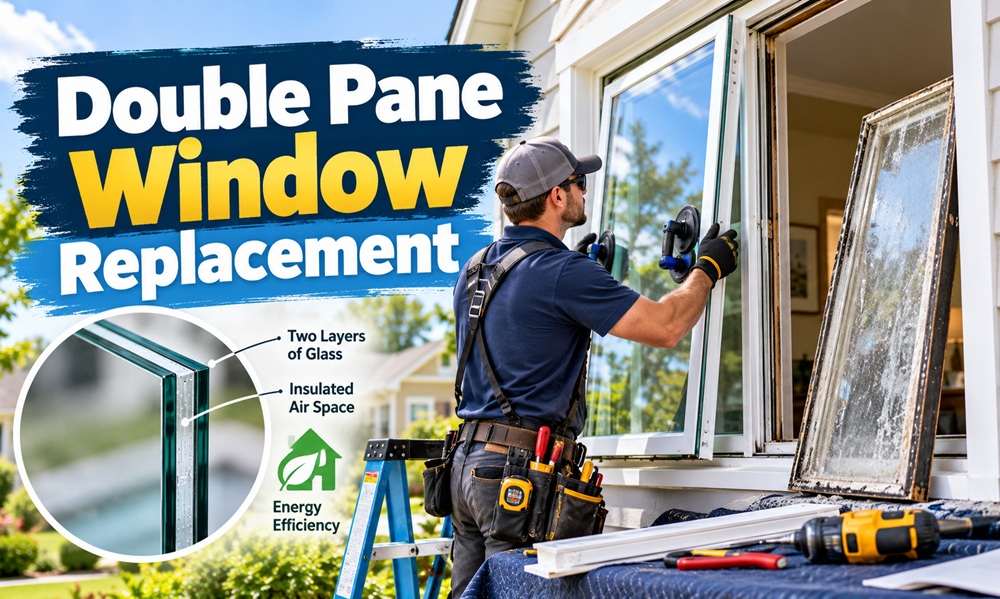
A window that fogs up between the panes can’t be wiped clean, and that’s usually the moment people start looking into double pane window replacement. The haze means the seal around the glass has failed, so the insulating gap is no longer doing its job. Whether you replace the glass alone or the whole window depends on the condition of the frame, your budget, and how long you plan to stay in the house.
What a double pane window actually is
A double pane window has two sheets of glass separated by a narrow gap and sealed around the edges. That sealed space slows heat moving between inside and outside, which makes the window more comfortable and more efficient than a single sheet of glass.
Many modern units go a step further. The gap may be filled with a gas such as argon, which conducts heat more slowly than air. The glass may also carry a low-E coating, a thin, nearly invisible layer that reflects heat back toward its source. In winter it helps keep warmth inside, and in summer it reflects some of the sun’s heat away from the house. A spacer around the edge holds the panes apart and forms part of the seal.
When replacement makes sense
Not every tired window needs to go. Here are the situations that most often point toward replacement.
- Fog or moisture trapped between the panes, which signals seal failure
- Drafts around the sash or frame even after weatherstripping and caulking
- Frames that are rotted, warped, or hard to open and close
- Rising energy bills combined with rooms that never feel comfortable
- Excess outside noise coming through the glass
- Cracked glass or damaged hardware that costs too much to keep fixing
Moisture on the inside surface of the glass is a different story. That’s often condensation from indoor humidity and doesn’t automatically mean the window has failed. Running exhaust fans, using a dehumidifier, and improving airflow may solve it.
Glass-only repair or full window replacement
If the frame is solid and only the sealed glass unit has failed, some companies can replace just the insulated glass unit. It can cost less than a full window, and it keeps your existing trim and frame intact. The limit is that you’re keeping the old frame, so any air leakage, rot, or outdated hardware stays with you.
Full replacement gives you a new frame, new glass, and new hardware, and it usually brings better performance overall. It makes the most sense when the frames are aging, when you want a different style, or when several windows are failing at once.
Insert replacement versus full-frame replacement
Once you’ve decided to replace the whole window, there are two main approaches.
An insert, sometimes called a pocket replacement, slides a new window into the existing frame while the surrounding trim stays in place. It’s quicker, less disruptive, and often more affordable. The tradeoff is a slightly smaller glass area, and it only works well if the existing frame is sound and square.
A full-frame replacement removes the entire window down to the rough opening. That lets the installer check for hidden water damage, fix the flashing, insulate around the opening, and set the window correctly. It costs more, but it’s the better route when rot, leaks, or poor past installation are in play.
Frame materials and what they offer
The frame affects looks, upkeep, and how well the window handles temperature swings.
- Vinyl is popular for its price and low maintenance, and it comes in many styles.
- Wood offers a classic appearance and good natural insulation but needs regular care, especially outdoors.
- Fiberglass is strong, stable in changing temperatures, and paintable, usually at a higher cost than vinyl.
- Aluminum is slim and sturdy but conducts heat easily unless it includes a thermal break, so it’s less common in cold climates.
- Composite frames blend materials to resist moisture and warping.
Pick a material that suits your climate and how much maintenance you want to take on.
Reading the performance labels
Windows rated by the National Fenestration Rating Council carry a label with several numbers. Two are worth understanding. The U-factor measures how well the window keeps heat from passing through, and lower is better. The solar heat gain coefficient measures how much of the sun’s heat the window lets in, and the right number depends on where you live. In hot climates a lower number usually helps, while in cold climates some solar heat gain can be useful.
An Energy Star label can also help you narrow things down, since certification criteria vary by climate region. Check the current requirements for your area rather than relying on a general rule.
Should you upgrade beyond double pane
Triple pane windows add another layer of glass and can improve insulation and sound control. They also add weight and cost, and in milder climates the extra benefit may not justify the price. If you’re in a very cold area or live next to a busy road, they may be worth a quote. Ask for both options and compare.
What affects the price
Window replacement costs vary widely, so I won’t offer a single figure. These factors shape the total.
- Number and size of the windows
- Frame material and window style
- Glass options such as low-E coatings, gas fill, or laminated glass
- Insert versus full-frame installation
- Condition of the surrounding wall, trim, and flashing
- Local labor rates and permit requirements
- Whether you need interior or exterior finishing work
Get written quotes that spell out each window, the materials, the installation method, and what happens with disposal and cleanup.
How the installation day usually goes
The crew protects floors and furniture, removes the old sash or entire window, checks the opening, and prepares it for the new unit. They set the window level and plumb, insulate gaps, apply flashing and sealant, and install trim. A typical home with several windows can often be done in a day or two, though larger projects take longer.
After the work is done, open and close each window, check the locks, and look for gaps or damage around the trim. Raise any concerns before the crew leaves.
Mistakes that cause problems later
Measuring poorly is one of the biggest. A window that’s slightly too small or too large leaves gaps that never seal properly, so the company should measure each opening carefully rather than assuming matching sizes.
Another is skipping the flashing and insulation around the frame. A beautiful window sitting in a leaky opening will still cause drafts and water problems. Choosing the cheapest glass package without checking whether it suits your climate is a third mistake, since a low-E coating that works in Arizona may not be the best match for Minnesota.
Finally, avoid replacing a few windows with a random mix of styles and colors. Even if you replace windows over time, keep the look consistent from the street so the house still feels cohesive.
Planning around the season
Replacement can happen in almost any season, although extreme cold or heavy rain makes the work harder and leaves the house exposed for longer. If you have flexibility, schedule during mild weather and replace the most problematic windows first.
Final thoughts
Double pane window replacement pays off most when you target the right problems, whether that’s failed seals, drafts, or damaged frames. Start by identifying why your windows are failing, decide between insert and full-frame installation, and choose glass and frame options that fit your climate. A good installation will matter as much as the window itself.
