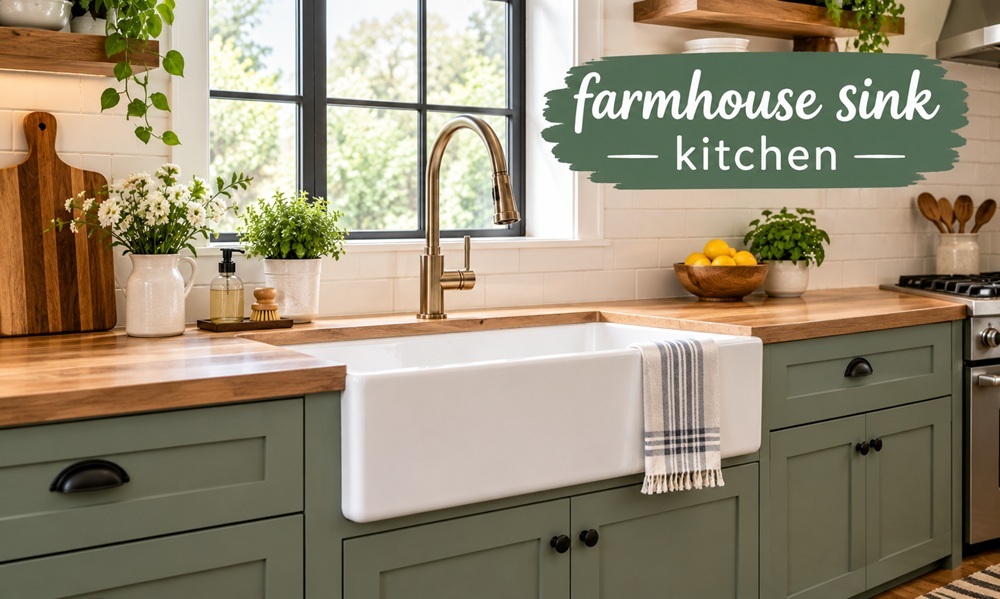
Picture a kitchen where the sink is the first thing your eye lands on. Wide, deep, with a smooth front panel that sits flush against the cabinet face. That is the appeal of a farmhouse sink kitchen. The sink stops being a hidden utility and becomes a feature that anchors the whole room.
It is also a bigger commitment than swapping a faucet. Before you fall for the look, it helps to understand what the sink is, what it is made of, what installing one involves and where it might not suit you.
What makes a sink a farmhouse sink
A farmhouse sink, sometimes called an apron-front sink, has an exposed front panel that extends past the cabinet line instead of tucking behind a countertop edge. The basin is typically deep and wide, built for large pots, baking sheets and the kind of cleanup that follows a big meal.
Most are single-basin designs, although double-bowl versions exist. The single basin is the classic choice because it fits oversized cookware without a divider getting in the way.
Choosing the material
The material shapes how the sink looks, how it ages and how much care it needs. Each option has real strengths and real quirks.
Fireclay
Fireclay is the traditional favorite. It has a glossy, smooth, almost porcelain look and holds a bright finish well. It is hard and resists staining, though a heavy dropped object can chip the surface, and chips can be visible against white. Fireclay sinks are heavy, so cabinet support matters.
Stainless steel
A stainless apron-front sink brings a lighter, more modern feel. It is durable and forgiving, and it will not chip. It can show scratches and water spots, and thinner gauges can sound louder under running water. Thicker steel and sound-dampening pads help.
Cast iron
Cast iron with an enamel coating has a rich, deep look and a reputation for lasting a long time. It is extremely heavy, and if the enamel gets damaged, the surface can be harder to repair. It suits kitchens where the sink is meant to feel substantial.
Copper
Copper develops a patina over time, which many people love and others find high maintenance. It has natural antimicrobial properties and a distinctive warm tone, but it needs a bit more care to keep its look consistent.
Composite and solid surface
Composite granite and similar materials are heavy-duty and often resist stains and scratches well. They come in more colors than just white, which helps if you want something darker or warmer.
| Material | Look | Care level | Main thing to watch |
|---|---|---|---|
| Fireclay | Glossy, classic | Low to moderate | Chipping from impact |
| Stainless steel | Sleek, modern | Low | Scratches and noise |
| Cast iron | Rich, enameled | Moderate | Weight and enamel damage |
| Copper | Warm, changes over time | Higher | Patina and polishing |
| Composite | Matte, varied colors | Low | Heat and cleaner compatibility |
Check the manufacturer’s care guidelines for whatever you choose, since cleaners that suit one material can damage another.
Planning the cabinet underneath
This is the part that surprises people most. A farmhouse sink does not simply drop into a standard cabinet. Most base cabinets are built with a solid front rail across the top, and that front has to be cut away or replaced so the sink’s apron can show.
The cabinet also has to bear the weight of the sink, plus water, plus dishes. Heavy sinks like fireclay and cast iron usually need reinforced support built into or added to the cabinet. In some cases a sink-specific base cabinet is the cleanest solution.
Sink size drives the cabinet size. Widths of 30 to 36 inches are common, though options vary by manufacturer. Measure your existing cabinet, and always check the sink’s published dimensions and installation requirements before ordering.
If you are replacing an existing sink in a finished kitchen, a professional can tell you whether the current cabinet can be modified or should be replaced. Countertop work is part of the equation too, since the cutout needs to match the sink precisely.
Countertops, faucets and the look around the sink
Most farmhouse sinks are installed so the countertop meets the sink neatly at the top edge, either sitting slightly above it or flush with it, depending on the model and the countertop material. Stone, quartz, butcher block and solid surface countertops can all work, but each needs accurate templating.
Faucet choice deserves attention because the basin is deep. A high-arc or pull-down faucet makes it easier to fill tall pots and reach the corners. Check where the faucet mounts, either on the sink, the counter or the wall, and make sure holes are placed accordingly.
As for style, the sink pairs naturally with shaker cabinets, open shelving and warm wood tones, but it is not limited to rustic design. In a crisp modern kitchen, a stainless apron-front sink can look sharp and simple. In a traditional kitchen, white fireclay does the job beautifully.
Thinking about workflow and layout
A farmhouse sink works best when the rest of the kitchen supports it. Because the basin is large, it makes sense to leave generous counter space on at least one side for a drying rack or a stack of dishes waiting to be washed. Placing the dishwasher close by keeps the path from sink to machine short, which matters more than it sounds once you are cleaning up after a meal.
Lighting deserves a look as well. A pendant or under-cabinet light above the sink makes the deep basin easier to see into, and a window above it adds natural light for daytime cleanup. Some owners also add a sink grid, a cutting board that rests across the rim or a colander that fits the width of the basin, turning the sink into a working prep area.
Think about height too. Standing at a sink that is too low or too high gets tiring quickly, so check the finished counter height and consider your own comfort before finalizing the plan.
Where it might not suit you
An honest look at the downsides will save you frustration later.
The deep basin can mean more bending, which some people find uncomfortable, especially if the sink sits low relative to your height. The exposed front can collect splashes and water marks on a cabinet face, and the front panel can take a knock from chairs or bags.
Fragile glassware may also be at more risk in a hard, deep basin. A basin rack or mat is a simple remedy, and it protects the sink surface as well.
Installation can cost more than a standard sink because of the cabinet work and the weight. If your budget is tight, this is worth factoring in early, since the sink itself is only part of the total.
Keeping it looking good
Daily care is straightforward. Rinse after use, wipe the surface dry when you can, and avoid leaving acidic or staining items sitting in the basin for long periods. Use non-abrasive cleaners suited to your material, and skip harsh scrubbing pads on glossy or matte finishes unless the manufacturer says they are safe.
A bottom grid is useful for any material. It protects the finish from pots and keeps dishes from resting directly on the surface.
Is it worth it
For people who cook often, host often or simply want a kitchen with character, a farmhouse sink kitchen is easy to justify. The capacity is real, the style is lasting and a well-chosen material can last for years with ordinary care. If you are comfortable with the cabinet work and understand the tradeoffs, it is one of the few kitchen upgrades that changes both how the room looks and how it works.
Leave a Reply